
AI Travel Agent App vs. Human Travel Agent: Why the Human Still Wins Every Time
In 2026, everyone has access to AI travel agent apps that work incredibly well. However, there’s one problem, being reliable and impressively working are two different things when it comes to planning your dream holiday.
After analyzing how people plan their trips nowadays, you’d be surprised by what is going on in this sector. Even though many people praise AI-powered solutions for booking and planning trips, real travel agents are thriving like never before. Travel agency gross bookings jumped 28% to $109.7 billion in 2023, while annual sales are expected to grow by 9%. Moreover, travel agency services market value reached $518.8 billion in 2025 and will continue growing reaching $572.8 billion in 2026!
This is far from the end of the era of human travel agents!
The question of whether a person should use an AI travel agent app or hire a human travel agent is easy to answer, it depends on how important their vacation is. I’m going to go over everything you need to know in this war of AI travel app v. human travel agent.

What Exactly Is an AI Travel Agent App?
First, let’s understand what an AI travel agent application is. It’s essentially a chatbot that uses artificial intelligence models such as ChatGPT, Google's Gemini, and other travel-focused applications such as Layla, MindTrip, Wanderlog, and WonderPlan to suggest trips, create itineraries, and make bookings from your prompts.
If you enter "Create a 7-day itinerary for my trip to Italy in September for two people for a budget of $4,000," you will receive a full day-by-day itinerary in just a couple of seconds. Pretty cool! If you only need some inspiration, this works fine.
But it becomes tricky when you start thinking about its practical application.

What Is a Human Travel Agent (And Why Are They Back)?
Human travel agents, also referred to as travel advisors today, are experts that plan, arrange and advocate your travel experience from start to finish. Travel advisors operate within agencies, host agencies or individually, and are usually compensated through supplier commissions; as such, their services do not incur any additional costs to you.
What many do not know is that 72% of travel advisors expect an optimistic future in their field as younger generations, families, luxury travelers, as well as an increasing number of solo travelers return to human guidance while traveling.
The debate here is no longer about artificial intelligence versus humans, but about when the help of the former is needed and when that of the latter is necessary.
The Side-by-Side Comparison
While planning your next trip, you may find yourself struggling to understand the distinctions between using an artificial intelligence travel application versus consulting a human travel agent. Below I provide a breakdown of each category in which the two options differ so that you can see the distinctions more clearly.
Speed & Convenience
It should come as no surprise to you that speed is a significant advantage of AI. For example, an AI travel app will be able to develop a 7-day itinerary literally in a few seconds without any delays. A human travel consultant will take slightly longer to put together a custom package for you, however, the time spent will be dedicated to coming up with the best ideas for you specifically, not based on statistical analysis of millions of similar trips.
Personalization
AI personalization will be based solely on the information that you type into the application. Your preferences, travel style, budget, previous travel experience – none of that can be known to the application. You may hate traveling by buses. You may need special food to be arranged for you because your mom is allergic to sea fish. The last time you traveled, you made the back-to-back schedule and hated every minute of it. None of that would be accounted for by an AI tool, while a travel agent would remember.
Real-Time Accuracy
In this case, you will be at risk of receiving inaccurate information from an AI tool. It could confidently recommend to you some hotel which doesn't exist anymore, or some route which is not actually passable. Its predictions will be statistically probable, but not verified.
A human travel agent is working with live Global Distribution System (GDS) and has access to live inventory and verified prices as well as up-to-date relationships with suppliers. Everything that the agent tells you is true.
Crisis Management
There is nothing like a real-life crisis to reveal all the weaknesses of your tools. In this situation, an AI travel tool will suggest alternate flights for you. That's it.
A human travel agent will:
call the airline on the phone through priority lines available only to professionals
contact your hotel or cruise line on your behalf
have real-world experience of distinguishing between theoretically possible solutions and actual alternatives
advocate for you as the agent's named client with booking history
In case of the hurricane off the coast of your resort or the sudden cancellation of your connecting flight at midnight, you will definitely prefer to talk to a human being rather than to a chatbot telling you to check the airline's rebooking portal.
Cruise and Theme Park Experience
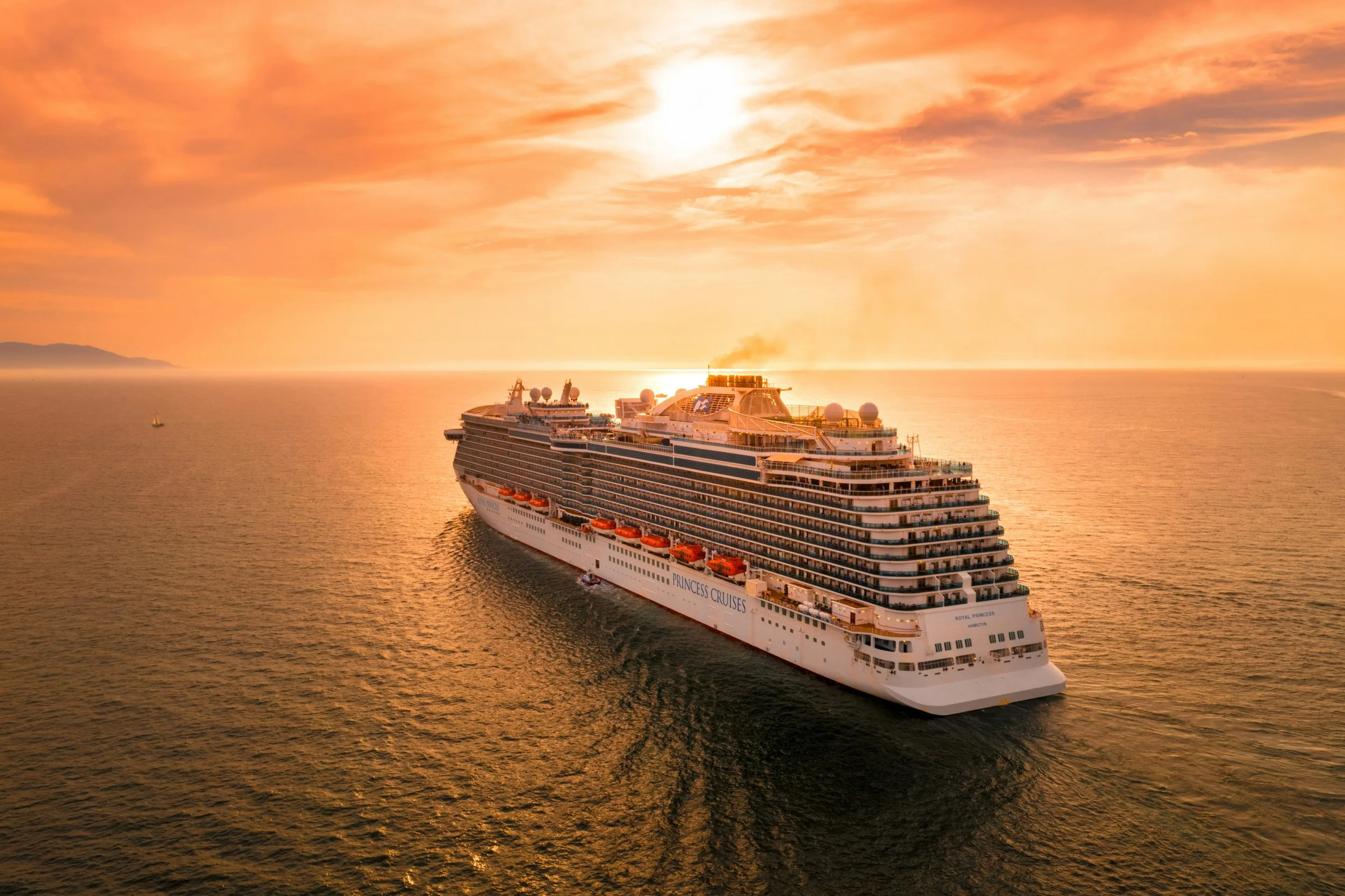
For a good reason, the majority of cruise bookings are done by professional human travel agents. A lot of decisions should be made during cruise booking: cabin deck, windows for dining, timing of shore excursions, gratuity structure, and more. All of those decisions affect the quality of your overall experience on board, and you should choose carefully.
An experienced cruise agent knows which deck is the least movable on the transatlantic cruise, while an AI cannot know that.
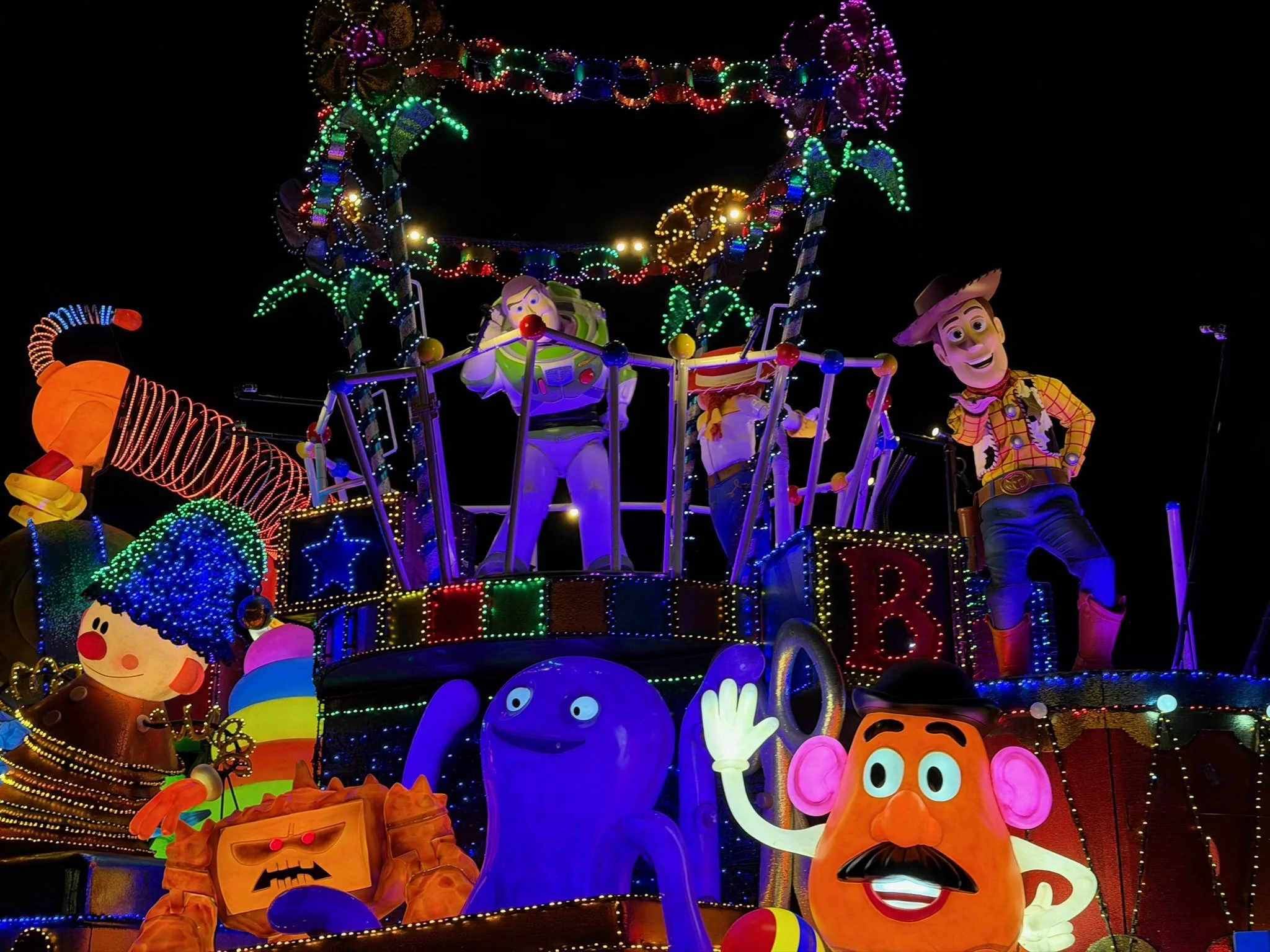
Same thing goes for the Disney vacations. A certified Disney travel agent completes Disney's proprietary training, wakes up at 5:45 AM to book the restaurants the moment when the 60-day booking window opens, and constantly monitors the booking to catch any price drops automatically. An AI tool can tell you that Be Our Guest restaurant is famous, but a Disney travel agent will get the booking for you.
Data Security
I think that this issue is not discussed frequently enough. Once you give your personal and financial information to the AI travel booking tool, you give your highly sensitive data to a system about the inner workings of which you have little knowledge. According to the survey conducted by Kaspersky, 86% of travelers who use AI for trip planning have active data security concerns.
A professional human travel agent will work within legal frameworks of their professional licensing and industry regulations. You will deal with an actual human being whose name and reputation will be on the line.
Accountability
In case the output of an AI travel booking tool was incorrect, and booked the wrong dates, confirmed the non-existing policy, invented a hotel – you would have very little chance of doing anything about it. Usually, companies working on AI systems argue that their outputs are mere suggestions, not guaranteed results.
A human travel agent has professional responsibilities for every single booking he or she makes. His reputation, livelihood and, sometimes, professional license depend on getting it right. This cannot be considered lightly.
The One Thing That an AI Will Never Have
Ultimately, there is the human aspect which an app cannot have. An AI travel tool does not care if your honeymoon was magical, your kids had fun at Disney, or if your cruise anniversary dinner made you cry. A travel agent will. An agent will celebrate your travels with you and feel miserable when something goes wrong, and then contact you later to discuss your experiences after you return home.
And that is not an app feature.

The Problem With AI Travel Agent Apps
However, to say the least, I'm trying to be objective here. Artificial intelligence tools are really helpful when it comes to generating ideas, making preliminary calculations about the costs of air travel, and outlining a basic itinerary. Nevertheless, things tend to go wrong once logistics and money become involved. Here's why:
AI Hallucinations Are Dangerous for Your Trip
This is not a fiction but rather a real case study from Peru. Tourists were guided by their AI itinerary to the "Sacred Canyon of Humantay" which is non-existent. To combine some names of the existing places into the fictitious location is the common way AI language models create their hallucinations. For instance, one tourist ended up paying almost $160 to get to a rural road near Mollepata with no guide and no destination.
Another case involves a couple that relied on ChatGPT's timetable for Mount Misen in Japan and found that the ropeway was closed already. In a separate case, one travel AI recommended a hotel in Costa Rica to a family that booked the flight only to discover that there was no such hotel. It appeared that the travel AI merged several descriptions of the existing hotels into one fictitious one.
These cases are far from being rare or accidental. This is the inevitable consequence of the mechanism by which AI language models operate. These models don't search for a real hotel room. Instead, they predict the most statistically likely word to be used next in the text. The more plausible AI language model works, the greater chance for fiction in the results, and your vacation will suffer as a consequence!
AI Isn't Knowledgeable About the Real Logistics of Your Trip
Even though the vast majority of AI travel planning tools pretend to offer professional solutions, the reality is far from this claim. Even the best AI tools available on the market can't:
Calculate the time required for traveling from point A to point B
Account for seasonal closure, holiday or weather
Consider your energy levels or health condition
Know that the place you asked about isn't operating anymore
Understand that "3 hikes + 2 museums in one day" means torturing people
Rick Steves' team stated explicitly that "smart travelers should tread with caution" using AI to plan their trips. The confidence with which AI speaks is really the key problem because it makes people believe that AI offers professional recommendations while in reality, it doesn't have any.
Liability of Your AI Travel Booking Tool Isn't Guaranteed
There is a really frightening thing about AI: a court case decided that Air Canada was legally responsible for a policy which AI chatbot hallucinated. The company argued that its chatbot was a separate "beta" tool and shouldn't be taken into consideration. So, if your AI travel booking tool makes a promise, guarantees you a suite with an ocean view for the price of regular rooms, or provides incorrect information about refund policy, you might not be able to sue the company.
If a human travel agent makes these mistakes, you may rest assured that there will be consequences for the travel agent since he or she is bound by professional liability rules.
Data Safety of Using Your AI Travel Planning Tool Is Not Guaranteed
Using an AI travel planning tool means providing your passport information, paying information, loyalty program number, and entire itinerary data. According to a Kaspersky survey, 86% of travelers using AI for planning vacations feel worried about their data safety. Almost half (48%) of participants noted that they see security risks and avoid sharing sensitive information.
Traveling AI agents operate in the privileged execution environment which is hard to monitor. So, a hacker who can manipulate the prompts or third-party content seen by the AI agent may trigger unauthorized transaction or gather your passport data.
Professional Human Travel Agents Work Under Professional Licensing Requirements.

What Human Travel Agents Do That AI Simply Cannot
They Actually Know Your Destination!
It feels like there's a whole genre of articles that refer to travel agents as people who "look things up online." Nothing could be farther from the truth. A good travel agent has visited the destination they're recommending to you. They've dined in the restaurants, gone through the airport. They know which resort's "ocean view" is really looking at a parking lot because one of their colleagues has warned them, or because they witnessed it themselves.
And no matter how much we talk about AI synthesizing this kind of information from training data, that's something you cannot synthesize. While artificial intelligence knows "popular," it definitely doesn't know "charming". AI may suggest a well-rated tourist attraction instead of some quaint little café, because the machine simply can't discern the difference due to lack of context.
AI can’t arrange champagne waiting for a newly married couple at their hotel or talk to a customer representative to get you that room upgrade. It’s not something you can just prompt an application to do.
They Fight For You When Everything Goes Wrong
Now there's a situation nobody ever expects, but sooner or later everyone encounters it: the flight is cancelled. The hotel is overbooked. You no longer have enough time to make your connection. There's a hurricane brewing outside of the resort where your all-inclusive vacation takes place.
While an AI can offer you some alternative routes, a human travel agent will call the people necessary to resolve the issue. They know whom to call in the cruise line and directly communicate with resort management. They've been through that before, with other clients in different situations, and they know which strings to pull to sort everything out.
In a study conducted by ASTA, 66% of respondents said their travel agent prevented them from making costly mistakes, while 64% of travelers claimed they got better deals thanks to their travel adviser. Hard numbers based on years of surveys prove this point.
They Save You Real Money AND Real Time
Now it's time to debunk a persistent myth that you can save money when booking on your own. Instead?
According to ASTA studies, travel agents save their clients $452 on average, plus 4 hours of planning time on each trip
64% of travelers receive better value or additional perks when booking their journey through a travel agent
Corporate travel data for 2025 shows that clients received $1.51 worth of value for each $1 invested in managed travel services, totaling $21.3 million saved overall from managed travel services
Managed travel clients reclaimed 37,771 hours within one year, time that can be spent growing their businesses instead of waiting on phone lines of airlines
Think about it, Americans spend an average of 16 hours of planning one trip, which equals two working days. All of that goes into a single conversation with a travel agent!
The 85% Rule
The data point I liked the most when researching this subject comes from the L.E.K. Consulting survey. According to its results, 85% of travelers said they would continue using their travel agents, even if they used AI technology in addition to it.
This isn't people choosing "AI instead of travel agent". People say that "despite AI being there, I'm going to continue using my travel agent". The two technologies are not competing for most of the consumers, but rather complementing each other.

Where Human Travel Agents Are Absolutely Unbeatable
Cruise Vacations
The cruise vacation world serves as an excellent example of the importance of human expertise. Travel agencies are expected to generate more than 70% of all cruise bookings in 2026. Here is the reason for it: there are dozens of choices to make when it comes to cruises, and they all interconnect – cabin category choice, times of meals, order of shore excursions, gratuity scheme, beverage package, reservations at specialty restaurants and embarkation process.
An AI can inform about the cost of a cruise vacation. An experienced cruise specialist can inform that deck 7 midship is the safest area in terms of movement during a cruise with stormy weather, that the specialty dining package is worth money if you intend to eat at three particular locations, and that booking a back-to-back in October allows getting a loyalty bonus plus the one due to the ongoing promotion. The level of experience like this cannot be found in training datasets.
Offline sales channels (including human travel agencies) account for over three-quarters of the cruise vacation revenue in 2024. That's not an accident.
Disney Vacations
Another world where a human travel agency's role is extremely important is Disney travel, and I speak from firsthand experience of the world of Disney parks. Disney travel agents are trained by the Disney College of Knowledge program and possess expert knowledge of Lightning Lane strategy and how to book character dining reservations.
Here’s the point many people don’t know, a Disney travel agent is practically free! The agent commission of the Disney travel agent is built into the pricing of the tickets whatever the case. So, you pay anyway, might as well use it! When you book your vacation directly, you get no strategic advice, no reservation control and no price drop notifications.
A Disney travel agent certified by the College of Knowledge does the following:
Wakes up at 5:45 AM EST on the day that is 60 days to your trip to grab the dinner reservations at the moment they open
Controls your booking and applies the new promotions that become available for you automatically
Plans Lightning Lane Multi Pass and Single Pass strategy according to your trip dates and your party composition
Notifies you about scheduling changes, new opportunities, and policy updates even before you start thinking of asking about them
None of these things could be done by any AI app. All an AI app can do is to suggest to try to get a reservation at Be Our Guest and leave the whole process to you.
Luxury and Honeymoon Vacations
When there is emotion behind a purchase (weddings, honeymoons, milestone birthdays, once in a lifetime travel) you need a human who will understand the subtext of "we want it romantic but we also want adventure". An AI can't do that, a travel agent can! They ask questions, they listen to your answers and understand not only what you say, but also what you imply.
Luxury vacations are the area where relationships matter, a travel agent who knows suppliers personally and has strong relationships with them can arrange:
Free upgrades on your room
Amenity packages (honeymoon extras, anniversary celebrations)
Access to sold out accommodations using personal contacts
Special cancellation and flexibility terms in writing
AI has "limited influence" over scarce inventory and VIP treatment. Human concierges and travel agents have "leverage via relationships and escalation paths".
Group Travel and Reunions
Travel for a group of 12 people belonging to four separate families, two kids under 10 years old, a grandparent with restricted mobility and a budget going from "economical" to "luxurious", that is the kind of vacation that will make any AI app useless. Group travel is complicated exactly due to the necessity to negotiate preferences rather than optimize the data.
Human agents manage group discounts, room blocks and dining reservations for groups in the way AI apps cannot do yet at the scale.

When AI Travel Apps Actually Make Sense
I’m not going to totally dump on AI apps, I promise. There certainly are instances where the utilization of an AI-powered travel planner is a good option:
Generation of ideas and quick brain storming, "I want 5 ideas for a long weekend getaway from Salt Lake City in October"
Situations that do not require a lot of planning and complexity, only one destination, regular hotel and non-stop flight
Budget estimation at the preliminary stage
Itinerary layout for a destination that you know pretty well
Doing some research prior to contacting your agent, just to have a point to start with the discussion
AI is your research assistant and travel agent is your consultant. Use the first to come up with ideas and the second to implement them perfectly!

Smart Travelers Use Both
Here's the plain truth, by 2026, the best travelers won't be forced to choose between AI and human agents. Rather, they'll use both to their advantage (hopefully)!
First, leverage the AI-powered planner to get a list of possible destinations, roughly calculate your travel dates, and test your budget. And if you are going for something complicated, pricey, meaningful, involving a cruise or a visit to a theme park, then ask a human agent to do their magic.
This isn't an easy way out. This is precisely what L.E.K. Consulting, Phocuswright, and industry experts came up with on their own accord based on thorough research of AI trends in the business. Together, AI and humans are more powerful than each of them separately.
But some things can't be replaced by any algorithm whatsoever, and that's the judgment. The one that tells you that being on a particular Peruvian trail will affect you in a totally different way than suggested in the pamphlet. The one that comes from experience of having planned Disney vacations for 200 families and knowing that the Beach Club Resort is easily reachable from EPCOT and it's game-changing for parents traveling with toddlers. The one that comes to mind without a second thought when you understand that there must be something wrong with the flight that you booked.
That kind of judgment doesn't come from an app. At least not now. And not soon.
FAQ’s
Is the use of human travel agents more expensive than booking flights online?
Not usually, in most cases. A lot of travel agents earn via supplier commissions and therefore charge you exactly the same price, maybe even less as they are aware of some deals not open to the public.
Can AI travel applications make real flights and hotel reservations?
Some artificial intelligence systems may integrate into booking tools, however, the reliability varies. There have been instances reported when AI travel agents recommend non-existing hotels, unavailable venues, and create impossible itineraries. It is highly recommended to verify every booking made by AI agent.
Are travel agencies still relevant in 2026?
Very much so! The U.S. travel agencies market is forecast to account for one-quarter of total travel sales in the U.S. in 2027. Travel agency revenue is projected to increase at a CAGR of 9.4% to $45.3 billion from 2021 to 2026. Travel agency business is thriving!
What types of trips should I trust to a human travel agent?
Cruises, Disneyland/Disney World vacations, luxurious trips, honeymoons, destination weddings, multi-stop destinations travel and anything when a disruption in the plan is devastating.
What kinds of trips can AI travel planning applications manage to some extent?
Simple domestic trips, weekend getaways, single destination city trips for experienced travelers, and pre-planning any trips.
Is my personal data secure when used for an AI travel application?
Research says to stay cautious. According to Kaspersky survey 86% of travelers using AI for their trip planning worry about the safety of their data. Security experts say that AI agents working with users' payment and identity information are creating a major risk. Be very careful with sharing sensitive data, don't let AI booking applications to connect to your primary bank account.
Can an AI application substitute human emotional support from a travel agent?
No. Research proves that human emotional interaction, support during any travel disruptions, celebration of your travel milestone, sincere advocacy on your behalf, is something AI applications will never be able to provide you with. Travelling is an emotional experience and the best experience is made by those who know it.
Do travel agents have access to better deals than me?
Yes, often. Travel agents usually have access to exclusive rates, onboard credits, room upgrades, and other promotional packages that are not available to the general audience. Statistics shows that 64% of travelers received better value/perks while working with a travel agent.
What if my travel plans ruined by a mistake of an AI travel application?
In case of an error in the information provided to you by an AI application you'll have no one to turn to. Air Canada's case shows that businesses can be held accountable for misrepresentations made by their chatbots but it's a complex issue. If your travel plans ruined by a human travel agent, at least you have a person you can reach out to.
How are travel agents using AI technologies themselves?
The smartest travel agents are already using AI technology for back-end purposes, initial research and comparing, communicating with the client. But after that, they make their judgment and recommendations based on their knowledge and expertise.

The Bottom Line
However, the argument between human travel agents and AI travel agency apps is not about superiority but specialization. The role of AI lies in dealing with quick, efficient, repetitive, and cost-saving tasks while human travel agents deal with the intricate, important, and indispensable processes.
The market for the travel agencies sector is estimated to grow to US$668.86 billion by 2030. There are many instances where cruise vacations still rely on human agents. Disney vacations require the assistance of a professional travel agent. When you have luxury travel or once-in-a-lifetime experiences, human agents will make sure that everything goes well.
AI can plan your vacation but a human travel agent will ensure its safety and go the extra mile every time. I know which one I’ll be sticking with!
Become a Travel Professional for Only $99
Turn your love of travel into extra income from home!
Join Now