
How to Become a Sandals Travel Agent: Proven Training & Commission Guide
Becoming a Sandals travel agent is simple. First, join the right host agency. Next, sign up in the Sandals Travel Advisor Portal. Then, complete a free certification course that only takes a Saturday. You don’t need a degree, a storefront, or a license in most states.
Most people don’t mention this, but it’s important. The host agency you choose can almost double your earnings for the same booking. You’ll have the same client, same resort, same calls and emails, and do the same work, but your deposit can be much higher.
I’ll break down the numbers for you soon. I’ll also guide you through the training, explain the commission details that can reduce your earnings, point out state licensing pitfalls, and cover something most guides skip: the advertising rules that could get you dropped before you earn anything.
Quick Overview
To become a Sandals travel agent, start by joining a host agency that works with Sandals. Then, sign up in the Sandals Travel Advisor Portal using your agency's IATA or CLIA number. Next, take the free Certified Sandals Specialist (CSS) course online. To keep your status, complete a yearly refresher and make at least one Sandals or Beaches booking each year.
You don't need any previous travel experience.

Why Sandals Is a Near-Perfect First Product
Imagine this situation:
A couple gets engaged on Tuesday. By Thursday, they've watched a bunch of honeymoon videos, argued over Jamaica or St. Lucia, and given up. They don’t want to compare hundreds of resorts. They just want someone to tell them where to go.
That’s where you come in.
Your clients are already excited. Honeymooners and anniversary couples book once, then come back again. With 17 Sandals resorts on eight Caribbean islands, you can send the same couple somewhere new every time.
The trips are valuable. A 7-night stay usually costs $4,000 to $7,000 per couple, not including flights. Butler suites can go well over $10,000. Since your commission is a percentage, bigger trips mean bigger checks.
Your clients don’t pay anything extra. Pricing is the same everywhere. There’s no markup, booking fee, or agent charge. Your commission comes from Sandals’ budget, which makes selling even easier.
The brand loves travel advisors. Business development managers, dedicated call centers, a full advisor portal.
What Travel Agents Really Do Today
Let’s take a quick detour, since people often wonder if this job is still around.
It does exist, but it’s very different from how it was in 1998.
You’re not just taking orders. You’re matching people with the right experiences and solving problems. Each day, you ask the important questions: Do they want a lively party scene or a quiet cove? Would they prefer snorkeling from the shore or relaxing in a rooftop infinity pool? Does anyone get carsick on a long transfer? Then you find the perfect resort, building, and room for each couple. You explain what “all-inclusive” really means and what it doesn’t cover. You also handle deposits, deadlines, checking names against passports, and helping with insurance choices.
And you’re the one who waits on hold with the airline when a storm disrupts travel plans.
Honestly, that last part sums up the job. You can’t guarantee that nothing will go wrong, but you do promise to take care of things when they do.
The Honest Requirements
There isn’t a Sandals employee application. Sandals won’t hire you directly. Instead, you’ll sell their products as an independent advisor.
What you genuinely need:
To be at least 18 and legally able to work
You need to be affiliated with an agency that has an IATA or CLIA number. You’ll use your host agency’s number.
You must have a host agency or your own accredited agency. This is required.
Completion of the CSS course
One registered Sandals or Beaches booking per year
Seller of travel registration, but only in certain states
What you don't need: prior industry experience, a degree, an office, or your own IATA number on day one.
IATA Agency Number and IATAN ID Card Are Not The Same Thing
This trips up nearly everybody.
An agency IATA number is a booking credential. Your host has one, and Sandals validates it at enrollment.
An individual IATA/IATAN ID card is your personal industry ID with real hurdles: 18+, listed on the agency personnel list, working 20+ hours a week in travel sales, and earning at least $5,000 in salary or commissions over the past 12 months.
A new advisor usually won’t qualify for the personal card right away. That’s okay. In the meantime, you’ll book using your host’s credentials. Later, the card becomes important because Sandals requires a valid IATA card at check-in for discounted agent rates. Without the card, you’ll pay the full rate.

Step 1: Choose Your Host Agency — Take Your Time
This is the most important decision you’ll make, but most people only spend about ten minutes on it.
Sandals has a loyalty program for agencies called the Chairman’s Royal Club (CRC), which is based on how much room revenue you book each year:

Commission rates are higher for preferred agencies, which usually earn 16-18%. In comparison, non-preferred agencies typically get about 10-14%.
Think about that, for the same booking, preferred agencies can earn six to eight percentage points more.
Advisors can also qualify for CRC through a different route, such as booking about 100 rooms or 700 room nights in a year. Another report says selling 250 rooms gets you CRC Elite at 17%, and 500 rooms earns Diamond Elite at 18%. Since both sets of criteria are used, ask your host to clarify which one applies to them and to you.
Ask these six questions before you sign anything:
What's your current Sandals CRC status?
What base commission does Sandals pay you?
What's my split, and does it improve with volume?
Do you have an active Sandals BDM relationship?
How often do your agents get FAM invitations?
When exactly do you release my commission after client travel?
Make sure you get everything in writing. Also, don't choose a host just because they offer the highest split. A 90% split is not helpful if the training is weak and the accounting is disorganized.

Step 2: Understand the Two-Layer Commission Math
Your paycheck isn’t simply 16 percent. There are several steps, and each one reduces your final amount.
First, Sandals pays your agency. For example, they might pay 16 percent on the commissionable part of the room and land package.
Next, your agency splits the commission with you. Most host agencies offer splits from70/30 up to 90/10 in your favor, and these often get better as you sell more. Some hosts will increase your share to 90% once you reach a certain amount, like $10,000 in paid commission.
Finally, the commissionable base is not the full price. Taxes, fees, gratuities, and transfers are not included. Non-commissionable fares can lower your effective rate by 20 to 30 percent.
One real booking, run two ways
Jenna and Marcus book 7 nights, Club Level, $6,000 total.
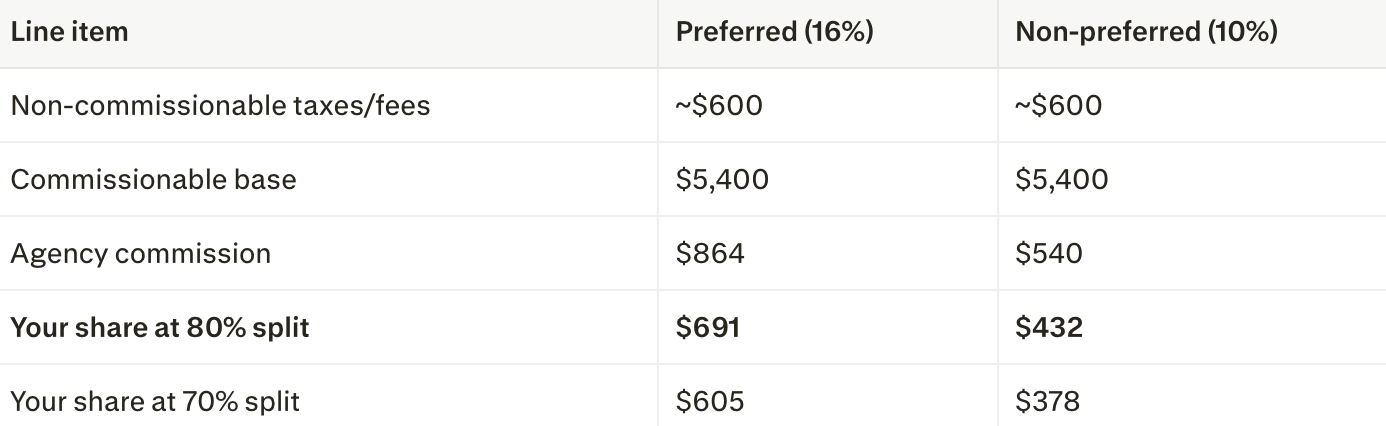
If you miss out on $259 from just one booking, and this happens twenty times a year, you could lose about $5,000 just from a single decision you made one afternoon.
This is exactly why Step 1 matters.
Step 3: Register in the Travel Advisor Portal
After you’re affiliated, sign up for the Sandals TA Portal with your agency’s IATA or CLIA number, then choose your agency from the list. There’s no cost to register. Some hosts may ask you to complete a training module before you can start booking.
Once you’re in, you’ll see your booking engine, marketing materials, advisor benefits page, and your dashboard.
To avoid problems later, use your professional business email and make sure your name matches the legal and payment information your host has. If you use a nickname in one place and your legal name in another, you might lose training records or commissions.
Keep a private note with your portal login, agency number, advisor ID, training dates, and renewal date. Never save client passport numbers or full credit card details in an unsecured spreadsheet.
Step 4: Complete the Certified Sandals Specialist Training
Cost: free! Sandals doesn't charge for CSS!
This training was once a live, in-person workshop in different cities. After COVID, it moved online and has stayed that way. Now, you’ll watch video modules and take quizzes.
If you’re motivated, you can finish the training in one day. Most agents, though, take a few evenings to complete it.
The training covers product knowledge for each resort, room categories, destinations, dining options, activities, transfer times, booking steps, and specializations such as weddings.
To pass the exam, you need a score of 75%. You can try as many times as you need, so there’s no pressure.
There’s also an optional Beaches specialization, which is worth completing while you’re at it. Beaches is the family-friendly brand, featuring waterparks and Sesame Street characters, with locations in Jamaica and Turks and Caicos.
My Advice On The Training
Don’t just rush through to pass. Take real notes on the different room categories. This is where you’ll find both higher earnings and happier clients.
If a bride says, "I saw the overwater bungalow on TV," you should be ready to explain what’s within her budget and suggest realistic alternatives. Setting clear expectations from the first call helps prevent disappointment and negative reviews.

Step 5: Keep Your Status Active
There are just two simple requirements.
Complete the annual online refresher in the portal.
Make at least one registered Sandals or Beaches booking each year.
If you miss either requirement, your status will lapse.
That second one matters more than it looks. You can technically book Sandals through other channels, but it only "counts" with Sandals if registered in the portal — and portal bookings have historically earned an additional 2%, bringing many agents to 17% on land.
Be sure to log every booking right away. Some agents lose both their certification credit and bonus percentage because they planned to do it later and forgot.
Step 6: Get Yourself to a Resort
You can read about a resort as much as you want, but visiting in person is a completely different experience.
There are two travel agent rate options. Every CSS advisor chooses the one that works best for them:
Option 1: Pay about $275 to $375 per night for you and a guest, but you take whichever room is available when you check in.
Option 2: Get20% off the advertised price, and you can choose your exact resort and room category.
I usually pick Option 1 during the low season when it's fun to take a chance, and Option 2 if I'm traveling with someone who cares about having a balcony.
FAM trips, now often called "Back to the Beach," are invite-only through your BDM and usually only cost you airfare. Bring cash for transfer and luggage tips, since those workers are not Sandals employees. In exchange, you'll be working: tours, classroom sessions, and social media tasks. Guests are not allowed.
Be sure to read the fine print. You need a valid IATA card at check-in, or you'll have to pay full price. Don't share your discounted rate with guests paying full price, and don't ask for upgrades while on property.
Make one trip last all year by creating content. Instead of just taking photos of sunsets, focus on what clients really want to know: room storage, outlets, bathroom layout, how far it is to the beach, hills and stairs, restaurant menus, and ceremony locations. Then create a first-person resort review, compare room categories, make a transfer-day checklist, record short videos, and write a post about who should book this resort.
This is how you turn an educational trip into a tool for sales, not just a collection of photos.

Step 7: Layer On Specialty Certifications
WeddingMoons Specialist. This is a major step, since destination weddings usually involve groups! One couple can mean thirty room nights. You need your CSS first. The designation typically comes from a workshop that covers selling techniques, wedding pre-planning, legal documents, and wedding rules for each island. The workshop also includes a mock rehearsal dinner, ceremony, reception, and cake tasting. There’s no fee for the workshop FAM, but you do pay for your own airfare. You’ll also need to sell at least three wedding packages each year.
Sandals Elite Advisor (S.E.A.). This program starts in February 2025. You move up through the status tiers by registering commissionable bookings of three nights or more. You’ll get support from your BDM, access to special call center teams, and a dashboard that tracks your lifetime, traveled, and future bookings, as well as your current-year revenue toward CRC.
The Commission Details Nobody Puts in Their Blog Post
You can earn bonus cash on top of your regular commission. For example, in November 2023, there was a campaign offering $150 for Butler and Love Nest Butler suites, $100 for Club and Concierge, and a $50 cash bonus. During Global Travel Advisor Day from May 1 to 31, 2026, bookings of six nights or more at select resorts earned $150 for Butler Suites, $100 for Club and Concierge, and $30 for Luxury and Deluxe. Some trade programs have also offered up to 3% extra commission, up to $85 in trade incentives, and a $25 instant booking bonus.
Timing a booking inside an active promo window can add $100-$200 of pure profit. Check the portal before you close.
You might notice the phrase "up to 21%" in different places. Press coverage often mentions 21%, agency reports usually show 16-18%, and state guides list 17%. These numbers aren’t conflicting; they just reflect different promotions, channels, tiers, and time periods. To be realistic, expect 16-18% as your usual range, with 21% possible during special promotions. Remember, your actual earnings depend on your commission split.
Points to Paradise, but there’s a catch in 2026. The program let you earn one point per net room dollar toward your own vacation, with thresholds ranging from 5,000 to 12,500 points. The points also carried over if you changed agencies. However, in early 2026, agents on industry forums said the program seemed paused, and the call center said a decision could take months or might even be permanent. It’s best to ask your BDM directly instead of making plans around this program.
When do you actually get paid? Be prepared for a wait. You won’t receive your commission until after your client has traveled. After that, Sandals handles the post-travel accounting, pays your host agency, your host reconciles the payment, and then you get your share. Realistically, this can take 30 to 90 days or more after your client returns. For example, if you book in January for a July trip, you might not get paid until August or September, even if the client paid in full back in February.
Here are two practical tips: Don’t leave your current job until you have 60 to 90 days’ worth of bookings that have already traveled. Also, consider charging a small planning fee for complex itineraries, since you get paid for that work right away. Expect to receive a 1099.
There’s one important detail to note. If you’re making bookings through a co-branded website, your commission payments depend on tracking codes and browser cookies. Sandals clearly states they are not responsible for commissions lost due to technology issues. Make sure to track your pending bookings in the Pre-Registration section. Don’t assume your commission will be credited automatically.
The Marketing Rules That Can Get You Terminated
I wish I had found a section like this when I first started, but none of the top guides covered it. If you plan to use paid search, pay close attention. Breaking these rules can stop you from selling the brand right away.
You absolutely cannot:
Bid on Sandals trademarks in paid search. Do not use keywords like Sandals, Beaches, WeddingMoons, Familymoon, Luxury Included, sandals.com, beaches.com, or any individual resort names. This applies to Google Ads, Microsoft/Bing Ads, and meta auctions such as TripAdvisor, Kayak, Trivago, and Google Hotel Ads.
Skip your negative keywords. You must include phrase-match negatives like Sandals Resorts, Beaches Resorts, Sandals, Beaches, the misspelling "Sandels," and both URLs.
Put Sandals in your domain, social handle, or ad headline. Always make sure your agency name appears in the ad.
Advertise discounts or "lowest price guarantee"
Frame sandals.com in an iframe
Message guests from Sandals' social platforms, reply to comments there, post in Sandals-run forums, or reference clients and bookings on Sandals-operated platforms
Solicit on resort property. No badges, shirts, bags, pens, or business cards handed to guests or staff
There are serious consequences, you could face liquidated damages of $1,000 per day for certain violations. If you stop within five business days after being notified, the first offense may be forgiven. The governing law is Panama.
Here’s what you are allowed to do: Use approved logos and images from the portal’s Logos & Images section. Your agency logo must always be larger and more noticeable than the Sandals logo. The Sandals logo cannot be bigger than 200 pixels wide by 100 pixels tall, and you cannot crop, enlarge, or change it. You can share photos you took yourself. You can also use official Sandals hashtags for Sandals campaigns.
Where does your traffic actually come from? Since you cannot use branded search, you will compete using problem-based keywords instead of brand keywords.
Best all-inclusive honeymoon resorts for couples who hate crowds
Caribbean destination wedding legal requirements by island
Overwater bungalow vs swim-up suite: which is worth the money
Which Caribbean island has the shortest airport transfer
Honestly, this is a better long-term strategy. You are building assets you own, rather than relying on a trademark you do not control. Creating helpful, people-focused content based on your own insights and experience is much more sustainable than just stuffing in keywords.
Marketing Support You Get for Free
Preferred agencies can access real resources by working with their BDM.
Printed brochures and booklets are surprisingly effective at community presentations.
You get digital ads and images for social media, paid campaigns, and newsletters.
Bridal show brochures
Expo stands are available, and sometimes a Sandals representative will join you at the show.
You can even get a free Sandals or Beaches car wrap. This is a real offer.
Your BDM can also help you set goals, develop marketing plans, provide niche training, and walk you through the portal.
Most new agents never reach out to their BDM. Stand out by doing so. It only takes a short message.
Where the Bookings Actually Come From
To be honest, just posting a few times on Facebook and waiting is not enough to build a business.
What actually works:
Set up a 10x10 booth at bridal shows to meet people who are planning their honeymoons right now.
Attend community events with a table. Showing up regularly helps people remember you.
Become the go-to travel expert at places like your church, school, gym, or your child's baseball league.
Post live from the resort. Share short videos, go live, post real photos, and follow up with people individually.
Focus on having engaged followers instead of just a large number. If no one comments, your audience is not truly connected yet.
Here’s something surprising, your first ten clients usually don’t come from online searches. They come from people you already know. Content and SEO help later, but relationships matter most at the start.
Do You Need a License to Sell Sandals?
There’s no federal travel agent license in the U.S., but some states do require seller of travel (SOT) registration. The important part is that these rules apply whether you’re based in those states or just selling to people who live there.
California: You need SOT registration and must join the Restitution Fund before you apply.
Florida: Register with FDACS if your agency is in Florida or you sell to Floridians. The fee is about $300 per year, and sometimes a bond is required.
Hawaii: Register with the Department of Commerce and Consumer Affairs.
Washington: You need your own license and proof of business registration.
Iowa: Several industry sources also list Iowa as having a requirement.
Florida notes fee waivers for active-duty military, honorably discharged veterans, and military spouses.
Here’s a shortcut: Many host agencies let you sell using their SOT number, so be sure to ask. Most states don’t require any formal travel agent certification.
Your bigger checklist might include setting up a business entity, getting an EIN, a local business license, a DBA, E&O insurance, and tax registration. This is general information, not legal advice, so always check with the right state agency.
Know the Destinations Cold
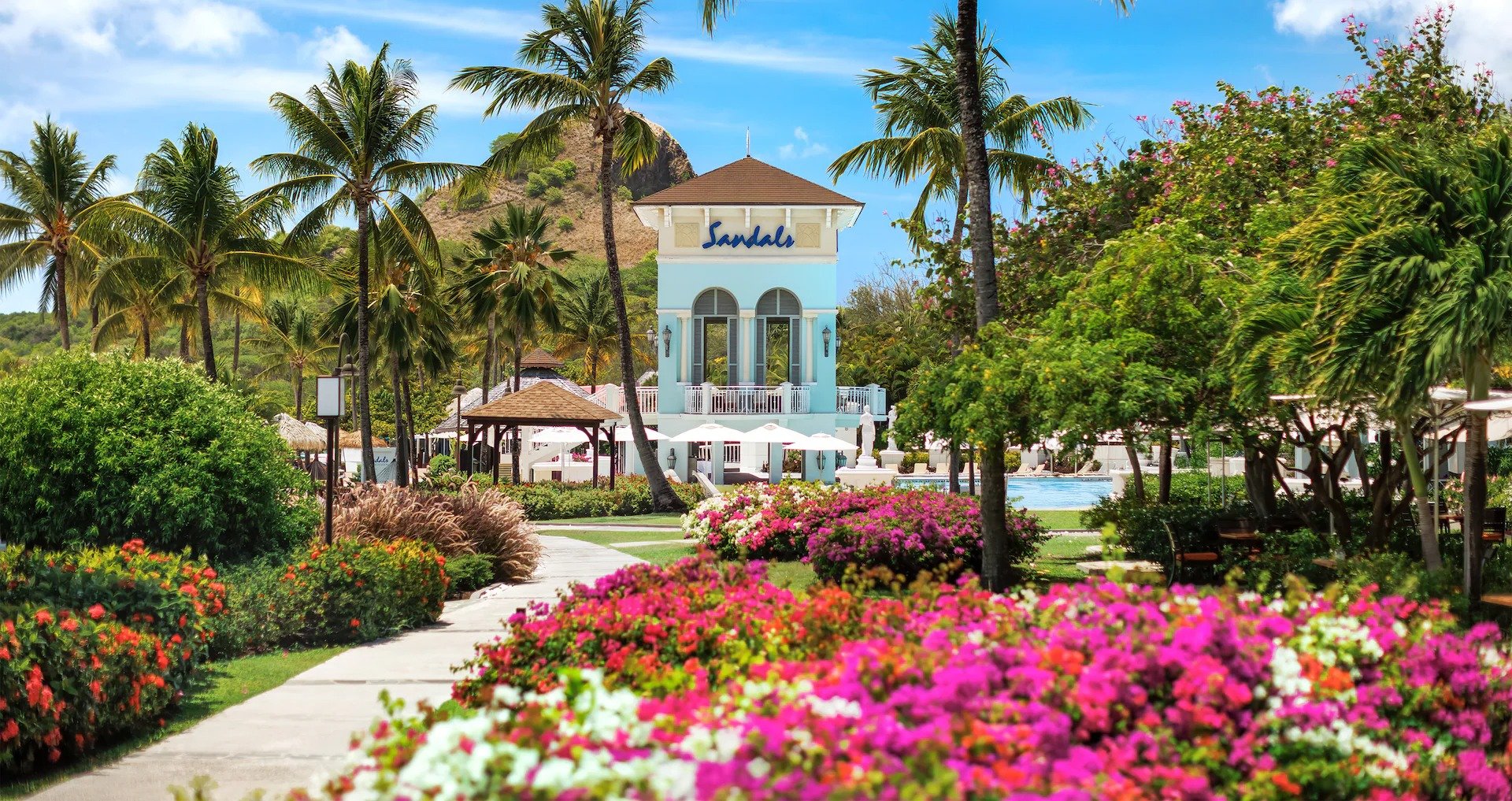
Seventeen Sandals resorts across eight islands, each with a distinct personality.
Jamaica: This is where it all began, and it has the most Sandals resorts. Montego Bay and Caribbean Cay are about ten minutes from the airport. Ocho Rios properties like Dunn's River, Ochi, and Royal Plantation are a scenic drive of over 90 minutes. Negril and South Coast are known for their sunsets and relaxed vibe.
Saint Lucia: The honeymoon heavyweight, thanks to dramatic volcanic peaks. Three properties — Grande St. Lucian, Regency La Toc, Halcyon Beach — with a stay-at-one-play-at-all-three arrangement so couples can bounce between restaurants and pools at no extra cost.
Barbados: There are two resorts next to each other in the lively St. Lawrence Gap, about 20 minutes away. Highlights include a rooftop infinity pool and a bowling alley.
Bahamas: Royal Bahamian in Nassau, roughly 15 minutes from the airport, with its own private offshore island.
Antigua: Grande Antigua is on Dickenson Bay, just 15 minutes away, and is often voted one of the most romantic resorts in the Caribbean.
Grenada: This resort is modern and intimate, offers great diving, has skypool suites, and is about five minutes from the airport.
Curaçao: Royal Curaçao opened in June 2022. It’s outside the usual hurricane belt and about 40 minutes from the airport.
Saint Vincent: This is the newest resort, opened on March 27, 2024. It’s tucked into a private cove about 50 minutes from Argyle International Airport.
Three major properties are currently being refreshed. Sandals South Coast reopens on November 18, 2026. Sandals Montego Bay and Sandals Caribbean Cay, which used to be called Royal Caribbean, both reopen on December 18, 2026.
Newly reopened resorts are easy to promote. Start building your content and outreach before those dates, so you’re ahead of the crowd. Saying "Have you heard about the brand-new Montego Bay?" is much more inviting than just asking "want to book a vacation?"
Common Mistakes New Agents Make
Choosing a host too quickly can be costly. For example, if you make twenty bookings a year at a 10% commission instead of 16%, you could lose about $5,000.
Don’t count your commission before the trip takes place. Booked revenue is not guaranteed cash. Trips can be canceled, and you usually get paid 30 to 90 days after your client returns.
Avoid booking flights through the resort. If a flight is canceled, you have to deal with the resort instead of the airline, and you usually don’t save money. Book flights directly to control the schedule, seats, and class.
Don’t compete only on price. These are premium resorts, so focus on the value they offer. Premium liquor, scuba, green fees, transfers, and gratuities are included. If you add up the extras at a cheaper resort, the total cost can be higher.
Don’t overlook the resort’s personality. If you send a couple looking for fun to a quiet boutique hotel, they’ll be bored. If you send a quiet couple to a lively swim-up bar, they’ll be unhappy.
Remember to talk about transfer times. A beautiful resort might be 90 minutes away. Some clients are fine with that, but others are not. Make sure to discuss this before taking a deposit.
Don’t just quote the cheapest room. The location, view, and service level can really change the experience. Explain the differences so clients can choose what matters most to them, but don’t pressure them.
Always register your bookings in the portal. If you don’t, you’ll miss out on CSS maintenance credit and a higher bonus percentage.
Don’t promise special requests. Unless the supplier confirms something is guaranteed, make sure to call it a request.
Don’t skip the compliance guidelines. If you bid on a branded keyword, you could face serious penalties.
Be honest if you haven’t visited a destination. Let clients know your advice comes from official training, up-to-date supplier information, and real client feedback. Clients trust honest expertise more than pretending you have personal experience.

What to Expect in Your First Year
Startup costs for hosted travel agents usually fall between $500 and $5,000, with most people spending about $1,500 and the most common amount being $500. Some host agencies charge $200 to $500 per year for everything. Others separate costs, with training fees from $295 to $895 and an annual fee between $240 and $840. There are also budget options for about $46 a month. If your state requires SOT registration, plan for an extra $300.
First-year earnings can vary. For example, if you make 15 bookings with an average value of $5,500 each, and about 10% of that is not commissionable, here’s what you might expect:
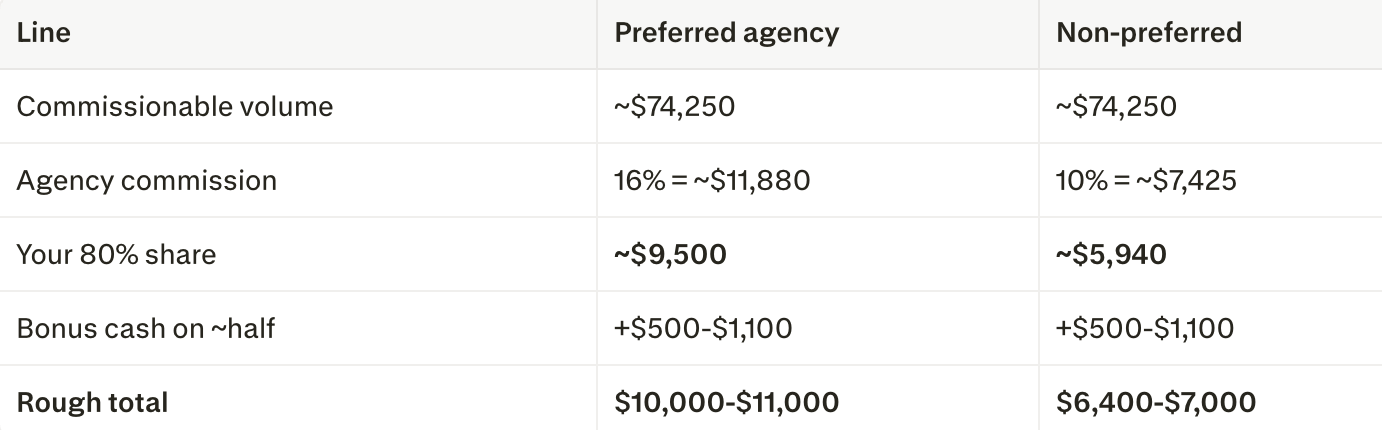
You could earn $10,000 to $11,000 part-time with 15 bookings if you work with the right host. This is real side income, not a salary, and just picking the right host can add about $4,000.
By your third year, if you have repeat clients, a couple of wedding groups, and steady referrals, your earnings can really start to grow!
Questions That Show Your Experience
Good consultations help you give better recommendations. Try asking:
What are you celebrating?
What's your total budget, and are dates flexible?
Quiet or lively?
Large resort or intimate?
Comfortable with a longer transfer?
Any mobility concerns?
Have you done an all-inclusive before?
What would make this vacation disappointing?
That last question is especially valuable. A client might say, "I don't want a party resort," or "I don't want to climb stairs every time we eat." These answers tell you more than any list of amenities ever could.

Frequently Asked Questions
How do I become a Sandals travel agent with no experience?
Join a host agency that's a preferred Sandals partner, register in the Travel Advisor Portal with your agency's IATA or CLIA number, and complete the free CSS course. No prior industry experience required.
Is it free to become a Certified Sandals Specialist?
Yes. Sandals doesn't charge for CSS. You'll still pay host agency fees to access the training and book commissionable reservations.
How long does CSS certification take?
Fully online, finishable in a single day. Most agents spread it over a few evenings.
Is the CSS exam hard?
Not really. You need 75% to pass, with unlimited attempts.
How much commission do Sandals travel agents make?
Non-preferred agencies may earn around 10-14%; top preferred agencies roughly 16-18% on the commissionable portion. Portal-registered bookings have historically added about 2%, bringing many to 17% on land. Promotions have advertised up to 21%. Your take-home is that rate times your host split, typically 70-90%.
Does booking Sandals through an agent cost more?
No. Standardized pricing applies across every channel — no agent fee and no markup. Commission comes out of Sandals' budget.
How do I keep CSS status active?
Annual online refresher plus at least one registered booking per year.
Do I need a travel agent license?
No federal license. But California, Florida, Hawaii, Washington — and, according to several industry sources, Iowa — require seller of travel registration if you're based there or sell to their residents. Many hosts let you operate under their number.
Do I need my own IATA number?
Not to start. You'll use your host's accreditation. An individual IATAN card requires 20+ hours a week in travel sales and at least $5,000 in salary or commissions over 12 months.
What's the difference between CSS, CRC, and WeddingMoons Specialist?
CSS is the foundational annual certification. CRC is performance-based — at agency level, $500K, $1.2M, and $2.4M in annual room revenue for Elite, Platinum Elite, and Diamond Elite. At advisor level, it can be measured by room bookings or room nights. WeddingMoons is a destination-wedding designation requiring CSS first plus about three wedding packages sold annually.
Can I get discounted stays?
Yes. Expect roughly $275-$375 per night for two with no room control, or 20% off with your exact room choice. Bring your IATA card or pay full rate.
Are FAM trips free?
Essentially. You cover flights and tips for non-Sandals staff. But you're working — tours, classes, social obligations — and guests aren't allowed.
How soon do I get paid?
After your client travels. Expect 30 to 90+ days after their return.
Can I run Google or Bing ads on "Sandals"?
No. Bidding on Sandals or Beaches trademarks, resort names, or URLs is prohibited, and specific negative keywords are required. Violations carry $1,000-per-day liquidated damages, waived on a first offense if corrected within five business days.
Can I use "Sandals" in my business name or domain?
No. Trademarks are prohibited in domains, social handles, usernames, and profile names, and any offending domain must be transferred without compensation.
Can I book Beaches too?
Yes. CSS covers both brands. Sandals is adults-only for guests 18+; Beaches is the family brand in Jamaica and Turks and Caicos. That's your natural client lifecycle — honeymoon, anniversary, then a Beaches trip once the kids arrive.
What happened to Points to Paradise?
Historically, it let advisors earn points toward their own vacations. Industry forums reported it paused or under review in early 2026. Check with your BDM for current guidance.
Your Next Move
What I want you to remember is that it’s easy to get started, but reaching real success takes a lot more effort.
Training is free! You only need to make one booking a year to keep your certification. Most states don’t require a degree or license. Anyone can get started as soon as next week.
The advisors who are earning real money did four things differently. They picked a host agency they liked, not just the first one that replied to an ad. They visited a resort in person and checked out the rooms. They made marketing a regular habit by going to bridal shows, setting up tables in the community, and sharing live videos from properties, instead of hoping social media would do the work for them. They also read the trademark rules before spending any money on ads.
Begin with these steps this week:
Make a list of five host agencies. Email each one the six questions from Step 1.
Find out if your state requires seller of travel registration, and see if your host agency takes care of it.
Once you’re affiliated, sign up in the portal and set aside a Saturday for CSS.
Send an email to your BDM to introduce yourself.
Book a stay at an agent rate or try to get a spot on a FAM trip. It’s much easier to sell when you can say, "I slept in that exact bed."
A year from now, you could be the person a nervous bride texts at 10 p.m. to ask if Ochi or Dunn’s River is better for her group of 24, and you’ll be paid well to help her.
That’s a great way to make a living. Go get certified. The Caribbean is waiting for you!
Become a Travel Professional for Only $99
Turn your love of travel into extra income from home!
Join Now